
Wat Sri Suphan: The Silver Temple’s Splendor
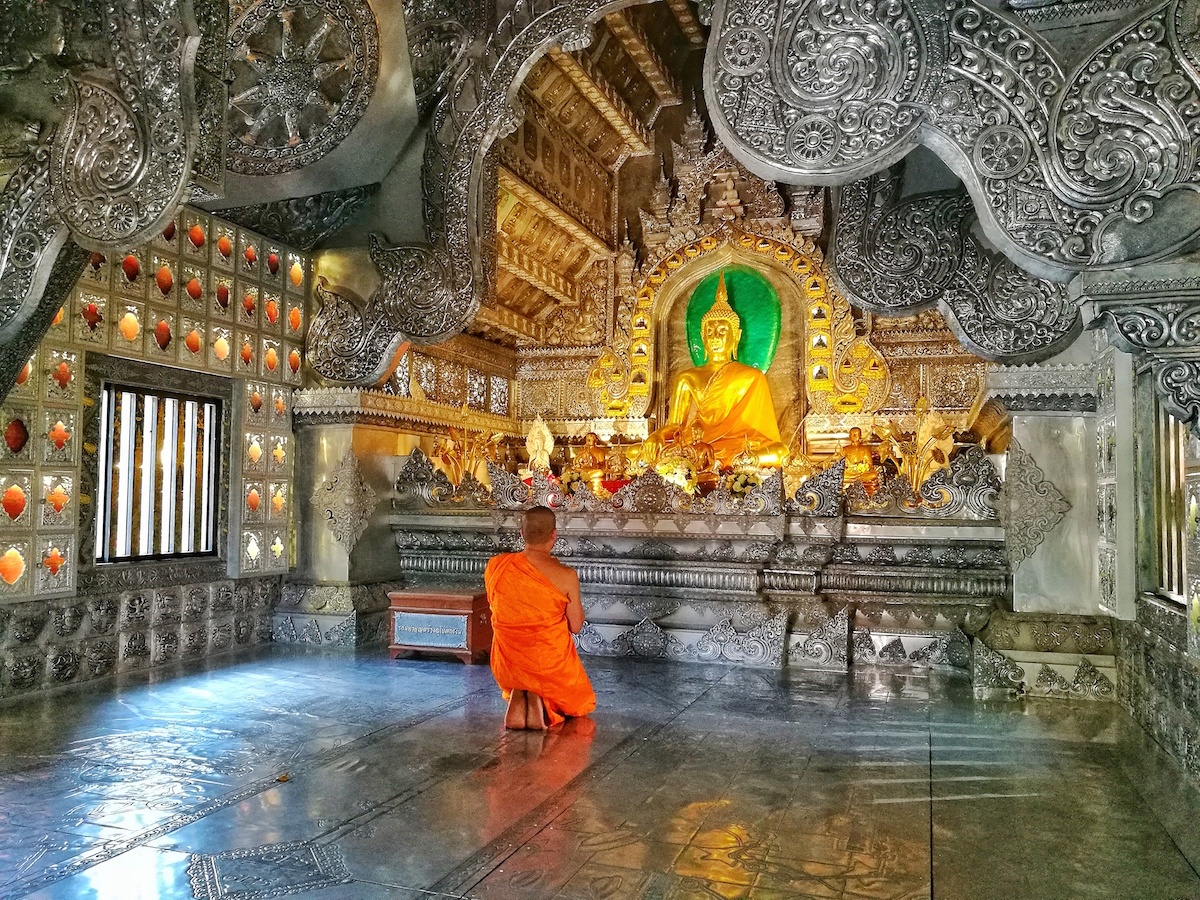
Uncover the History and Beauty of Chiang Mai’s Wat Sri Suphan, the First Silver Temple in the World.
🏛️ Introduction: A Silver Sanctuary in the Old City’s Southern Quarter
If Chiang Mai has a place where devotion, design, and living craft fuse into one unforgettable scene, it is Wat Sri Suphan. Set along Wua Lai Road—just outside the southern edge of the Old City—this temple is often introduced as the “Silver Temple,” but that nickname only hints at what’s waiting inside. Here, faith is not merely housed in buildings; it is hammered, chased, and engraved by hand into metal surfaces that catch sunlight in the morning and glow under lanterns at night. The first impression is almost cinematic: a calm temple compound wrapped in the everyday rhythm of a neighborhood known for silversmithing, where workshops and family-run craft traditions have shaped the identity of the street for generations. For travelers seeking Must Visit in Chiang Mai experiences that feel genuinely rooted in place, this is a rare find—equal parts sacred site and living museum, where artistry is not frozen behind glass but continues to evolve.
✨ The Story and Spirit Behind the Name
The deeper you look, the more Wat Sri Suphan becomes a story about Chiang Mai itself: a city where the old and the contemporary are not enemies, but partners. While the temple has long served as a community spiritual center, its modern fame comes from a bold idea—using metalwork as the primary visual language of a temple’s most sacred architecture. This isn’t decoration for decoration’s sake. The choice of silver-toned reliefs reflects both devotion and identity: Wua Lai is historically associated with silver craft, and the temple acts as a proud emblem of that heritage. Even for visitors who have toured many temples in Thailand, this one feels refreshingly specific to Chiang Mai. Instead of relying only on murals and lacquered wood, it speaks through etched panels, engraved cosmology, and luminous textures that shift with every step and every angle of light.
🥈 The Silver Ubosot: Architecture You Don’t Just See—You Read
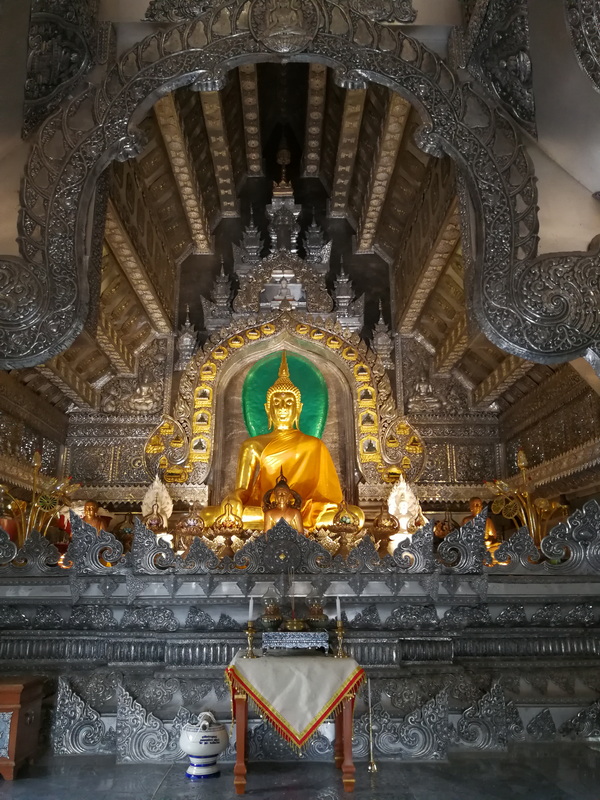
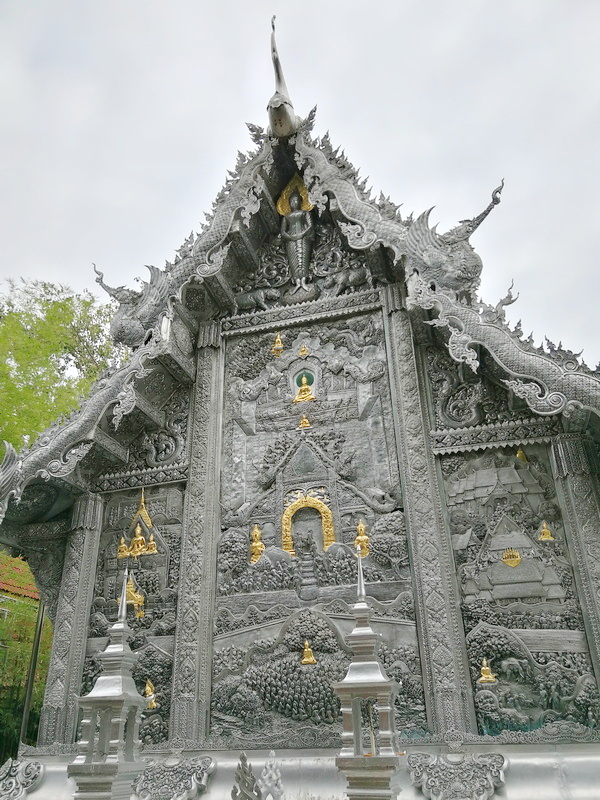
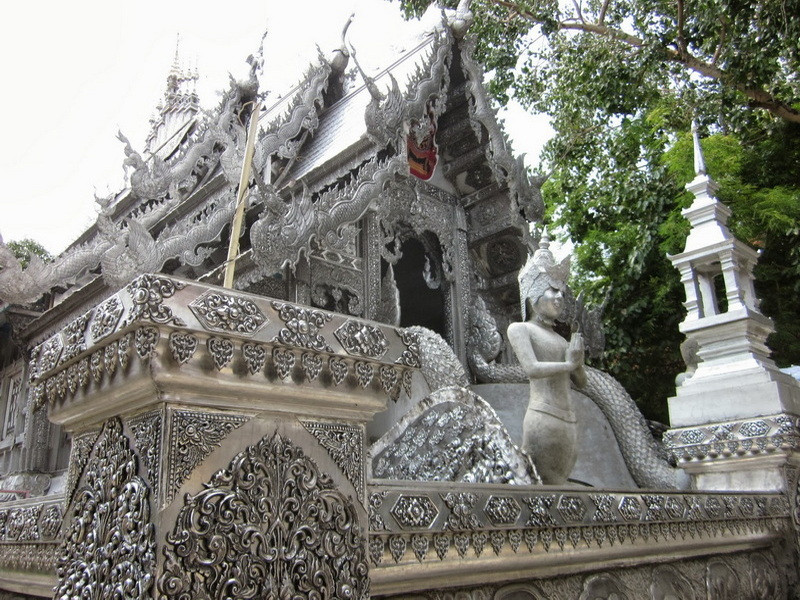
The star of the compound is the silver-clad ordination hall, often described as the world’s first of its kind in this style. From a distance, it looks like a traditional northern Thai form—tiered rooflines, elegant proportions, a ceremonial presence—yet as you approach, the surface details come alive. The exterior panels are dense with meaning: Buddhist narratives, moral symbols, protective motifs, and imaginative references that reflect the artists’ perspectives across time. Some sections feel classical and reverent; others feel unexpectedly modern, as if the craftsmen intentionally invite today’s visitor into the temple’s storytelling. The metal surface isn’t flat like a sheet—it’s alive with relief, depth, and shadow, giving you a reading experience rather than a simple photo moment. Stand still for a minute and you’ll notice how the hall changes as clouds pass overhead: bright highlights sharpen into sparkle, then soften into a satin-like sheen. That constant transformation is part of the charm—this is architecture that behaves like jewelry, but on a monumental scale.
🧘 Sacred Etiquette and Cultural Sensitivity Inside the Ordination Hall
Before you plan your visit, it’s important to know that local tradition restricts entry to the ordination hall: men may enter, and women are asked not to cross the threshold. This is a sensitive and sometimes emotional topic for visitors, but the most respectful approach is to treat it as a cultural boundary within a living religious community—one that locals continue to observe. The key point for travelers is that the experience is still complete even without entering: the exterior artistry is extraordinarily rich, and many visitors spend most of their time walking the perimeter, studying the imagery, and photographing the details from multiple angles. In practice, the temple offers many meaningful spaces open to everyone—courtyards, surrounding structures, and the broader artistic environment—so the visit does not become “less” for those who remain outside the ubosot. If you arrive with a calm mindset and curiosity, the site becomes an invitation to understand how spiritual beliefs, community identity, and traditional rules coexist in modern Chiang Mai.
🏯 Beyond the Silver Hall: Viharn, Chedi, Courtyards, and the Temple’s Layout
While the silver ubosot draws the spotlight, the rest of the compound provides context and calm. The viharn (prayer hall) and surrounding structures create the sense of a functioning temple rather than a single showpiece. You’ll notice a gentle separation between spaces meant for ritual and spaces meant for visitors: open courtyards where people linger, shaded corners where locals pause for merit-making, and transitional walkways that guide you naturally from observation to contemplation. Even the “negative space”—the quiet pauses between buildings—matters here, because it allows the shine of metalwork to stand out without overwhelming you. Some areas feel intentionally educational, giving you clues about local craftsmanship and the community’s relationship to the temple. If you slow down, you can experience Sri Suphan Temple as a narrative: you arrive through a neighborhood, enter a sacred compound, encounter a monument of craft, then exit back into everyday life where that craft is still practiced.
🛠️ The Learning Center and Hands-On Workshops: What You Can Actually Do Here
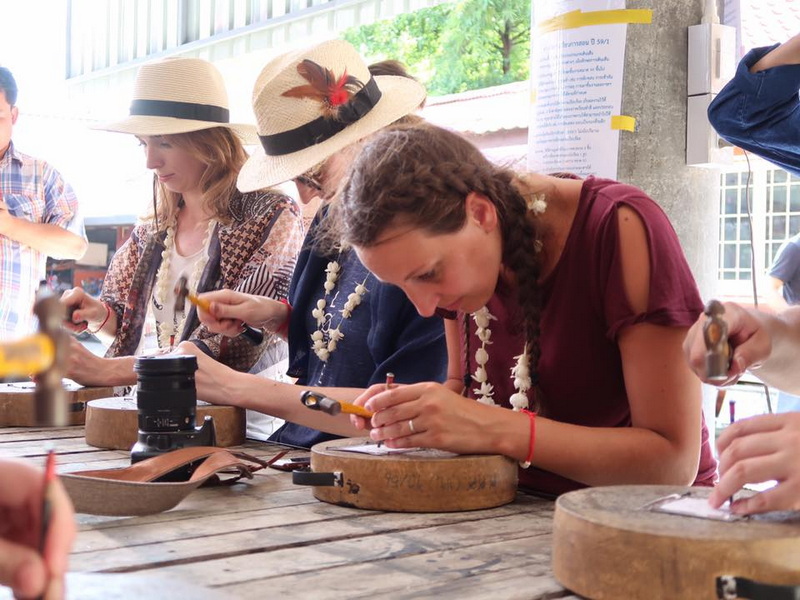
One of the most valuable dimensions of this temple is that it doesn’t only display silver craft—it teaches it. On the temple grounds and in the immediate area, there is a learning-focused space associated with silverwork traditions, often described as a silverware learning center and workshop presence within the compound. In practical terms, visitors who want more than sightseeing can arrange a hands-on session to try traditional techniques under guidance. Typical workshop experiences focus on introductory-level metalwork skills: learning how patterned relief is created, how basic engraving or chasing textures are formed, and how small items can be shaped and finished. Instead of attempting a full-scale silver object, you’ll usually work on a small souvenir-scale piece so you can complete it in a manageable timeframe—think a small plaque, a simple pendant-like piece, or a keepsake panel with basic motifs. The experience is tactile and memorable: you feel the resistance of the metal, learn why certain patterns are traditional, and understand how the temple’s surfaces were built panel by panel.
📞 Workshop Booking, Contact Channels, and Price Expectations (Read Carefully)
Because workshop schedules depend on artisan availability and the temple’s activity calendar, booking is often recommended rather than assuming a walk-in slot. A commonly shared method is to reserve at least 24 hours in advance by phone at 089 432 2594 or via LINE (often referenced as “gmclub”). Pricing can vary by what is offered on the day, but visitors frequently report a workshop fee around 200 THB for introductory participation—however, because this can change (materials, group size, lesson length, and whether a take-home piece is included), the best approach is to treat 200 THB as a ballpark starting point and confirm the exact cost when you reserve. If you’re traveling as a couple, family, or small group, mention your group size and preferred time window; if you’re traveling during peak season or on a Saturday (when Wua Lai is busiest), booking ahead becomes even more important. If you don’t want a full workshop, you can still “learn by watching” by spending time studying the metal panels up close and speaking politely with staff about the craft tradition—this alone can make the visit feel like a cultural deep dive rather than a quick photo stop.
🚶 Getting There, Best Timing, and How to Pair the Temple with the Neighborhood
To reach Wat Sri Suphan, the simplest route is from Chiang Mai Gate at the southern Old City edge—then walk into Wua Lai Road where the neighborhood begins to reveal its craft identity. Many visitors fold the temple into a Tuk Tuk Tour Chiang Mai route, because it pairs beautifully with nearby Old City landmarks and allows you to arrive without worrying about parking on busy evenings. For timing, mornings give you softer crowds and clean light for seeing the details; late afternoon gives warmer highlights on the silver surfaces; and Saturday evening is a different world entirely. On Saturdays, Wua Lai transforms into the Chiang Mai Saturday Market—an energetic walking street atmosphere with food, crafts, and the hum of local life. Visiting the temple just before the market peaks can be magical: you experience the calm of the compound first, then step into the festival-like street scene after. If you’re planning Chiang Mai day tours, this temple works especially well as a “meaningful anchor stop” between larger sights: it offers spiritual atmosphere, unique craftsmanship, and neighborhood culture in one place—without the feeling of being rushed through a checklist.
📍 Nearby Attractions
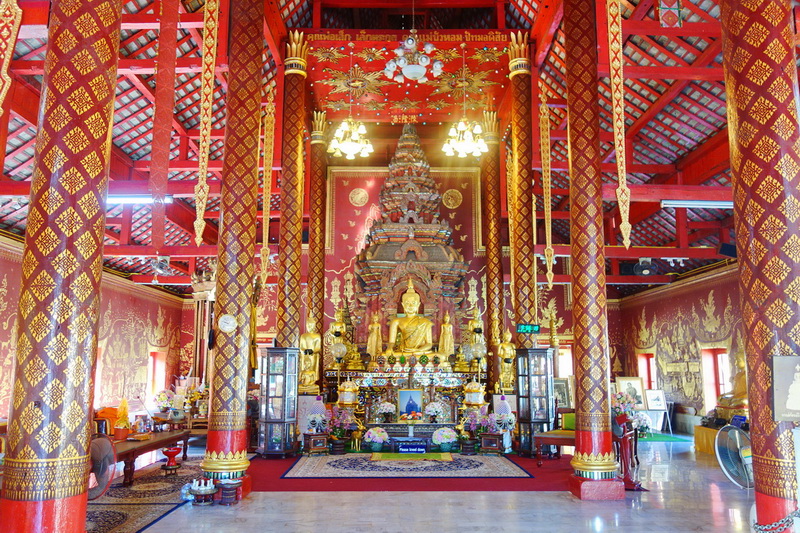
Wat Phra Singh is one of Chiang Mai’s most celebrated temples inside the Old City, admired for classic northern Thai architecture and a strong sense of royal-era heritage. Pairing it with Wat Sri Suphan creates a fascinating contrast: traditional gilded elegance versus contemporary metal artistry. Visit earlier in the day for calmer courtyards and a more contemplative atmosphere.
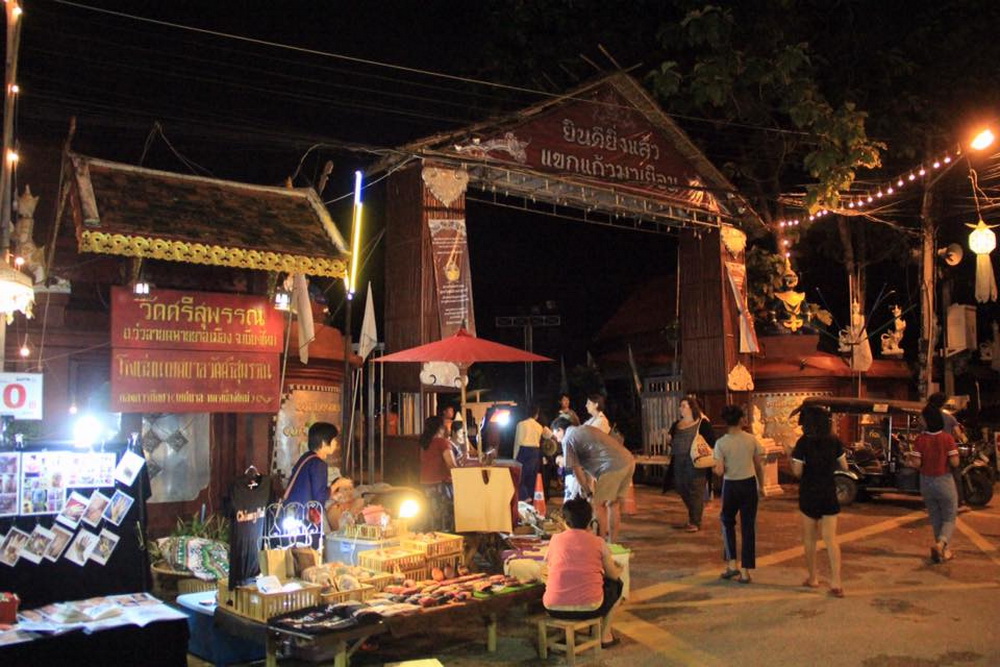
The Chiang Mai Saturday Market on Wua Lai Road is the temple’s most natural companion experience. In the early evening the street fills with craft stalls, local snacks, music, and a lively crowd that feels distinctly neighborhood-based. It’s ideal to wander slowly, snack as you go, and notice how silver-themed crafts echo the identity that Wat Sri Suphan celebrates.